



A slip and fall accident in a store, apartment complex, parking lot, or other property in Sanford does not automatically create a legal claim against the property owner. Florida law requires the injured person to establish specific facts about what the property owner knew or should have known before liability attaches. Understanding how that standard works helps injured people know what their claim requires from the outset.
The Legal Standard for Slip and Fall Liability in Florida
Florida’s premises liability law requires an injured person in a slip and fall case to prove that the property owner or its employees knew about the dangerous condition, or that the condition existed long enough that the owner should have known about it through reasonable inspection and care. This is called the notice requirement, and it is the most frequently contested element in Florida slip and fall cases.
Florida law also imposes a specific burden on injured parties in business premises cases. A plaintiff must demonstrate that the business had actual knowledge of the dangerous condition, or that the condition occurred with regularity and was therefore foreseeable. Simply showing that a hazard existed and caused an injury is not sufficient. The connection between the owner’s knowledge and the failure to act must be established.
What Actual Notice and Constructive Notice Mean
Actual notice means the property owner or its employees were directly aware of the dangerous condition before the accident. A wet floor reported to a manager, a broken step noted in a maintenance log, or a spill witnessed by staff are examples of actual notice. Constructive notice means the condition existed for long enough that a property owner exercising reasonable care would have discovered and addressed it.
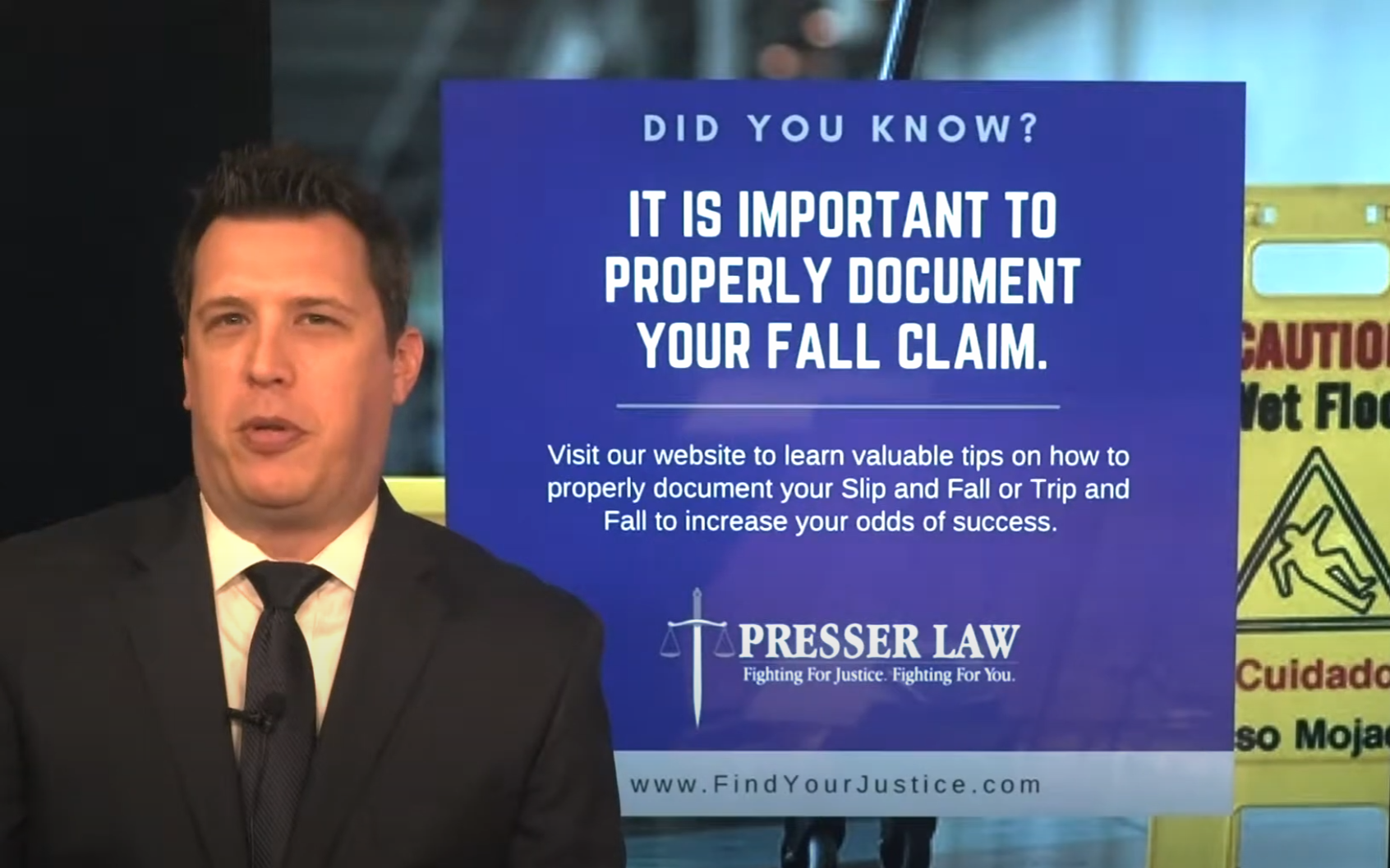
Establishing constructive notice typically requires evidence about how long the condition was present. Surveillance footage showing a spill that sat unaddressed for an extended period, testimony about inspection intervals, or physical evidence suggesting the hazard had been present for some time all support a constructive notice argument. A Sanford slip and fall lawyer investigates and preserves this evidence as early as possible, because it is often time-sensitive and unavailable once the scene is cleaned and footage is overwritten.
What an Injured Person Must Prove in a Florida Slip and Fall Case
To establish liability in a Florida slip and fall claim, the injured person must prove:
- The property owner owed a duty of care to the injured person based on their status as an invitee, licensee, or trespasser
- A dangerous condition existed on the property
- The property owner had actual or constructive notice of the condition
- The property owner failed to repair the condition or provide adequate warning
- That failure caused the accident and resulting injuries
Each element must be supported by evidence, and the strength of that evidence determines both whether the claim succeeds and what it is worth.
How Florida’s Comparative Fault Rule Interacts With Slip and Fall Claims
Even when liability is established, Florida’s modified comparative fault standard can reduce recovery if the injured person is found partially at fault. Defense teams in slip and fall cases routinely argue that the plaintiff was not watching where they were walking, was wearing inappropriate footwear, or ignored visible warning signs. These arguments must be anticipated and countered with evidence of the plaintiff’s reasonable conduct.
Presser Law, P.A. is a Central Florida personal injury firm representing slip and fall victims throughout the Sanford area, including cases where notice, foreseeability, and comparative fault are the central issues in the liability analysis.
Taking Action After a Slip and Fall in Sanford
If you were injured in a slip and fall accident on someone else’s property in Sanford, speaking with a Sanford slip and fall lawyer as soon as possible is the most effective way to preserve the evidence that establishes the property owner’s notice and protect your right to recover.


![[SIMPLE AND EASY] Reason Why You Need to Document the Injury Scene | Personal Injury Attorney](https://www.findyourjustice.com/wp-content/uploads/2025/10/SIMPLE-AND-EASY-Reason-Why-You-Need-to-Document-the-Injury-Scene-Personal-Injury-Attorney.jpg)